

 English
 русский
 Deutsch
 Türk
Türk 中文简体
中文简体
product
product
product
product
product
product
product
product
product
product
product
product
product
product
product
product

Product Category
Contact us
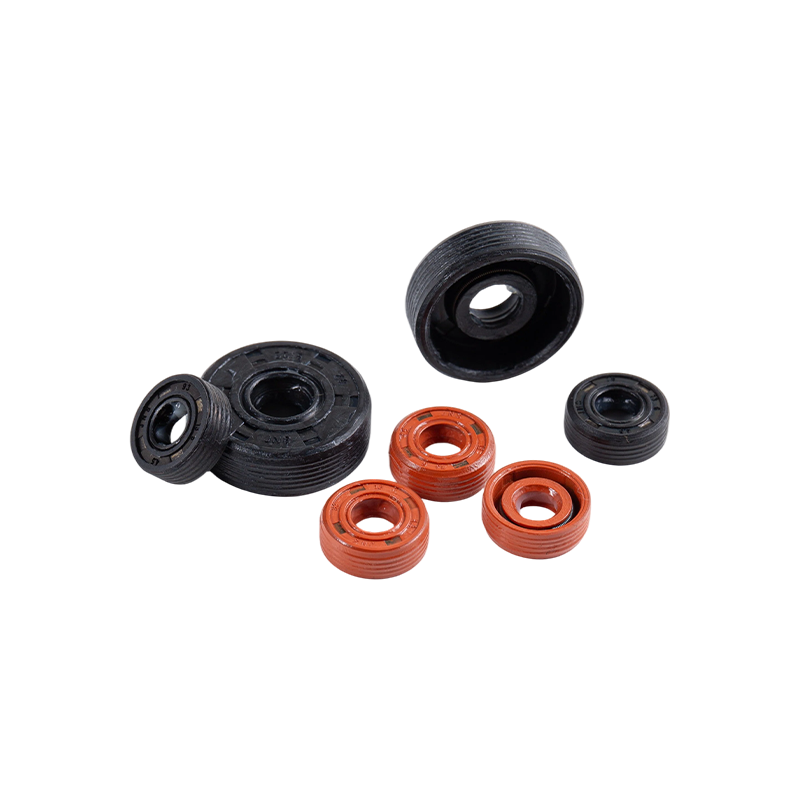
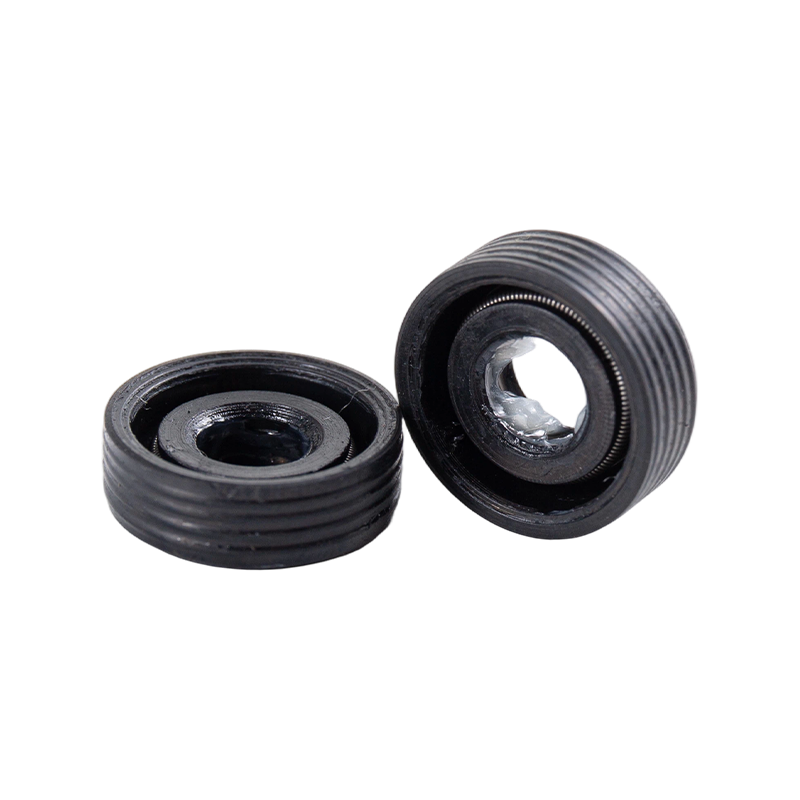
Ring Oil Seal ODM Manufacturers
Message Feedback
About Us
JNS: Precision Sealing, Reliable Motion
– Engineered for Gas Springs & Dampers
Ningguo Jnsseals Sealing Technology Co., Ltd. is dedicated to gas spring and damper sealing technologies, including high-quality O-rings. We are China Ring Oil Seal Manufacturer and Wholesale Ring Oil Seal ODM Factory. Since 2019, we have been delivering reliable, durable, and cost-effective sealing solutions to the automotive, furniture, home appliance, medical equipment, and construction industries. Whether facing extreme wear, high temperatures, or demanding long-life requirements, JNS is built to perform.
We believe that a great seal is not just a component—it's a promise. With automated smart manufacturing, eco-friendly processes, and rigorous quality control, JNS products excel in sealing performance, durability, and value. Choose JNS for stability, safety, and trust that lasts.
Contact: jns@jnsseals.cn
Read More

Ningguo Jnsseals Sealing Technology Co., Ltd.
Ningguo Jnsseals Sealing Technology Co., Ltd.
Ningguo Jnsseals Sealing Technology Co., Ltd.
Ningguo Jnsseals Sealing Technology Co., Ltd.
Ningguo Jnsseals Sealing Technology Co., Ltd.
Ningguo Jnsseals Sealing Technology Co., Ltd.
Ningguo Jnsseals Sealing Technology Co., Ltd.
What's News
Industry Insights & Updates
View All News
-
2026-10-16Industry news
-
2026-10-09Industry news
-
2026-10-01Industry news
Industry Knowledge
How Contact Stress Distribution of Damping Oil Seals Determines Seal Life in High-Frequency Reciprocating Motion of Shock Absorbers and Dampers
In the high-frequency reciprocating motion of shock absorbers and dampers, the contact stress distribution of the Damping Oil Seal is the decisive factor governing seal life. Understanding this relationship is essential for designing durable sealing systems that can withstand demanding operating conditions.
1. The Fundamental Relationship Between Contact Stress and Seal Life
During high-frequency reciprocating motion, the seal lip repeatedly contacts and separates from the moving shaft surface. The contact stress distribution—including the maximum contact stress value, contact stress distribution width, and radial force attenuation rate—directly determines the seal's operational lifespan.
- Maximum contact stress value must be controlled within a specific range. If it is too low, sealing effectiveness is compromised and leakage occurs; if it is too high, lip wear accelerates, reducing seal service life.
- Contact stress distribution width refers to the axial width of the contact zone between the lip tip and the shaft. Excessive width reduces the unit area specific pressure, affecting sealing performance; insufficient width causes stress concentration, leading to localized tearing or excessive wear.
- Radial force attenuation rate reflects the material's creep resistance and its ability to maintain sealing integrity during long-term service. This indicator is obtained by comparing initial contact stress with measurements after simulated operational cycles.
2. Why Contact Stress Distribution Matters in Dynamic Applications
The seal in a shock absorber operates in a mixed lubrication regime, where both fluid pressure and asperity contact pressure contribute to the total sealing contact pressure. Research shows that the leakage failure of damping seals primarily results from cumulative contact damage between the seal and the piston rod. Optimizing the cross-sectional profile can reduce strain at critical locations by approximately 24%.
Key factors influencing contact stress distribution include:
- Lip geometry: A uniquely designed lip tip can significantly reduce contact stress, addressing issues such as excessive friction leading to wear aggravation and friction noise.
- Compression ratio: In static sealing analysis, reducing the compression ratio from 26.84% to 19.82% decreases surface contact stress by 9.22% and effective sealing width by 23.15%.
- Spring preload: The spring provides an additional tightening force to the oil seal. For oil seals that have been in service, when the inherent radial force decreases due to lip wear, the spring's tightening force can effectively prevent leakage. In one analysis, the spring provided approximately half of the total radial contact load.
3. Failure Mechanisms Related to Contact Stress
Research on motorcycle rear shock absorbers indicates that seal leakage is significantly influenced by the rubber compound, structural dimensions, and contact surface roughness of relative parts. Additionally, overload-induced spring bending causing single-sided seal wear can also lead to leakage.
In practical applications, common failure scenarios include:
- Accumulation of contact damage caused by repeated vertical motion from track irregularities and excessive vertical acceleration in high-speed trains.
- Lip seal failure due to contamination, where sand and debris adhering to the shock absorber rod scrape the oil seal during reciprocating motion.
- Rod bending from abnormal impact, creating clearance gaps at the seal interface.
4. Contact Stress Performance Comparison
| Parameter | Impact on Seal Life | Recommended Range/Consideration |
|---|---|---|
| Maximum Contact Stress | Too low → leakage; too high → accelerated wear | Must be optimized for application-specific conditions |
| Contact Stress Distribution Width | Too wide → reduced specific pressure; too narrow → stress concentration | Typically <0.1mm for unrun seals; widens after running-in |
| Radial Force Attenuation Rate | Higher attenuation → shorter effective seal life | Minimized through material compound optimization |
| Spring Contribution | Provides backup sealing force as lip wears | Can contribute up to 50% of total radial load |
| Compression Ratio | Higher ratio → higher stress but more wear | 19-27% typical for static seals; dynamic applications require careful optimization |
Frequently Asked Questions (FAQs)
1. Why does contact stress distribution have a greater impact on seal life than simply the maximum stress value?
Contact stress distribution involves not only the peak stress but also the width, uniformity, and attenuation rate of the contact zone. Uneven pressure distribution often indicates lip geometry deviation, parting line flash defects, or spring groove machining errors, which are major causes of early leakage. Ningguo Jnsseals Sealing Technology Co., Ltd. uses advanced finite element analysis to evaluate the complete contact stress profile during the design phase, ensuring optimal lip geometry and material selection for each application.
2. How does Ningguo Jnsseals Sealing Technology Co., Ltd. optimize damping oil seal design for high-frequency reciprocating applications?
Ningguo Jnsseals Sealing Technology Co., Ltd. employs CAE-based finite element simulation to model the assembly and compression process, calculating contact stress contours and identifying potential sealing weak points. By analyzing material models using Mooney-Rivlin parameters and evaluating the effect of compression ratio, spring preload, and lip geometry, JNS engineers can predict seal performance before manufacturing. This approach ensures that the final product achieves a balanced contact stress distribution, extending service life while maintaining sealing integrity.
3. What are the most common real-world causes of damping oil seal failure related to contact stress?
Based on field experience, the most common causes include: (1) Contamination—sand and debris adhering to the shock absorber rod scrape the oil seal during motion, compromising the contact surface; (2) Rod bending—from abnormal impact, creating uneven contact stress and clearance gaps; (3) Wear from high-frequency cycling—leading to increased radial force attenuation and reduced sealing contact pressure over time. Ningguo Jnsseals Sealing Technology Co., Ltd. provides comprehensive technical consultation to help customers address these challenges through proper seal selection, installation guidance, and maintenance recommendations.


Want to know more
about us?
about us?

Precision sealing for gas springs and dampers. Durable, wear-resistant, and built for long-life performance in demanding applications.
Product Categories
Quick Links
Contact Us
-
Email: jns@jnsseals.cn

-
Manager Gong: +86-18563770820

-
Manager Wang: +8615357558902
-
No. 5, Meilin Avenue, Meilin Industrial Development Zone, Ningguo City, Anhui Province, China

