

 English
 русский
 Deutsch
 Türk
 中文简体
Industrial Balanced Damping Seal: Specs, Materials, and Selection Guide
Industrial Balanced Damping Seal: Specs, Materials, and Selection Guide
Industrial Balanced Damping Seal: Specs, Materials, and Selection Guide
Industrial Balanced Damping Seal: Specs, Materials, and Selection Guide
Industrial Balanced Damping Seal: Specs, Materials, and Selection Guide
Industrial Balanced Damping Seal: Specs, Materials, and Selection Guide
Industrial Balanced Damping Seal: Specs, Materials, and Selection Guide
Industrial Balanced Damping Seal: Specs, Materials, and Selection Guide
Industrial Balanced Damping Seal: Specs, Materials, and Selection Guide
Industrial Balanced Damping Seal: Specs, Materials, and Selection Guide
Industrial Balanced Damping Seal: Specs, Materials, and Selection Guide
Industrial Balanced Damping Seal: Specs, Materials, and Selection Guide
Industrial Balanced Damping Seal: Specs, Materials, and Selection Guide
Industrial Balanced Damping Seal: Specs, Materials, and Selection Guide
Industrial Balanced Damping Seal: Specs, Materials, and Selection Guide
Industrial Balanced Damping Seal: Specs, Materials, and Selection Guide

Industry news
Home / News / Industry news / Industrial Balanced Damping Seal: Specs, Materials, and Selection Guide
NEW Category
Contact us
Industrial Balanced Damping Seal: Specs, Materials, and Selection Guide
Content
- 1 What an Industrial Balanced Damping Seal Actually Balances
- 2 Four Specifications That Decide Whether a Balanced Damping Seal Fits
- 3 Balanced vs Standard Lip Seals: Where the Difference Shows Up
- 4 Why Material Grade Decides Damping Seal Life, Not Size
- 5 Sizing a Balanced Damping Seal to a Real Damper
- 6 Installation Mistakes That Kill Balanced Damping Seals
- 7 Frequently Asked Questions
A gas spring that fades on a durability bench rarely has a gas problem. The oil has crossed the rod seal. An unbalanced damping seal presses harder on one side of the rod than the other on every stroke, and that asymmetry, not general wear, is what squeezes the film through. An industrial balanced damping seal is built to remove that asymmetry: it spreads radial contact force evenly around the circumference so the oil film stays constant through the full travel.
What an Industrial Balanced Damping Seal Actually Balances
An industrial balanced damping seal is a lip-type elastomeric ring whose cross-section distributes radial contact force evenly around the entire circumference, so the piston rod sees the same film thickness at every point of its travel.
A standard single-lip Y-seal or L-seal presses the lip against the rod with a force that rises alongside system pressure. That approach holds up as long as the rod stays perfectly centered. Add side load, a slightly off-axis damper tube, or a rod that deflects under compression, and the lip distorts at the point of highest load. Contact stress there can double while the opposite side of the ring drops toward zero. The consequences stack: localized friction heat, lip extrusion into the clearance gap, and a leakage path that opens long before the seal is worn out.
Balanced geometry fixes the load path rather than the material. Symmetric or double-acting lip profiles flatten the pressure peak, which means the seal survives eccentric running without being specified tighter, and therefore hotter, than the application actually needs.
That matters across a wide set of end products. Gas springs and dampers in automotive liftgates, adjustable furniture columns, appliance hinges, medical equipment arms, and architectural dampers all run under some degree of side load. JNS supplies sealing components into those industry applications, and the damping seal is usually the part that sets the service interval.
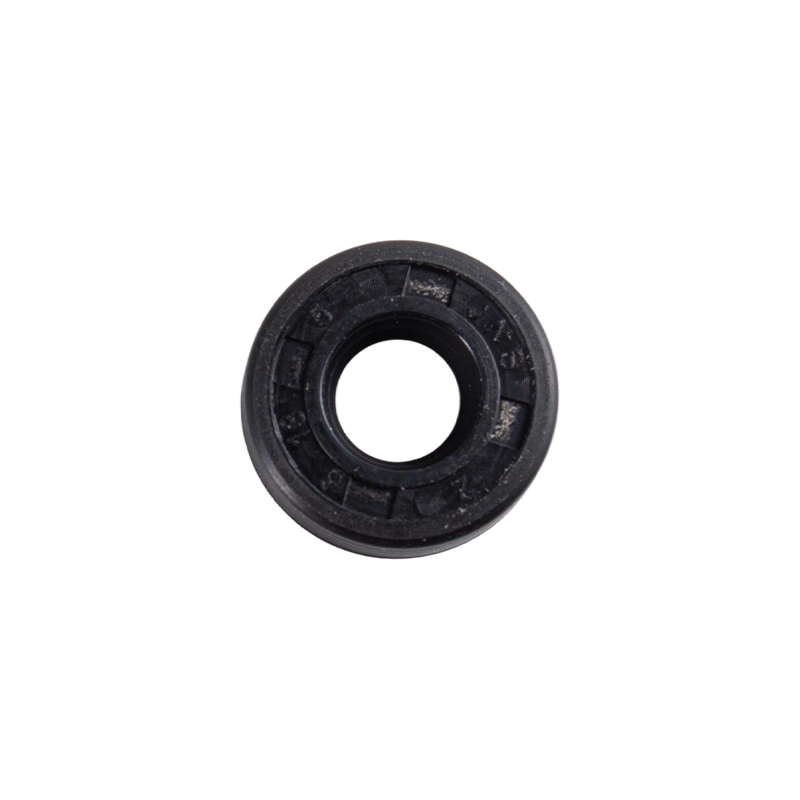
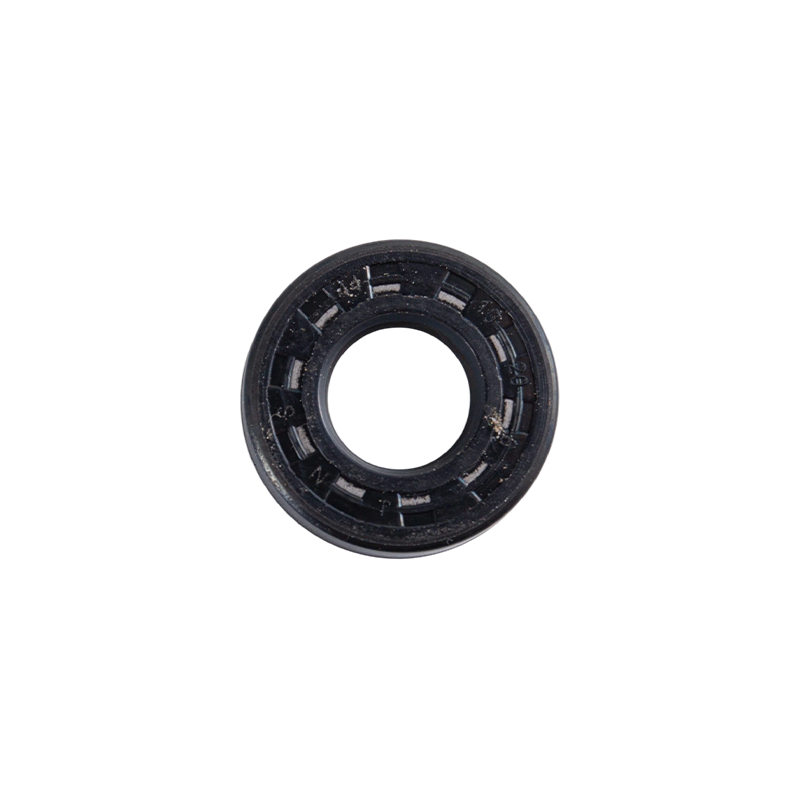
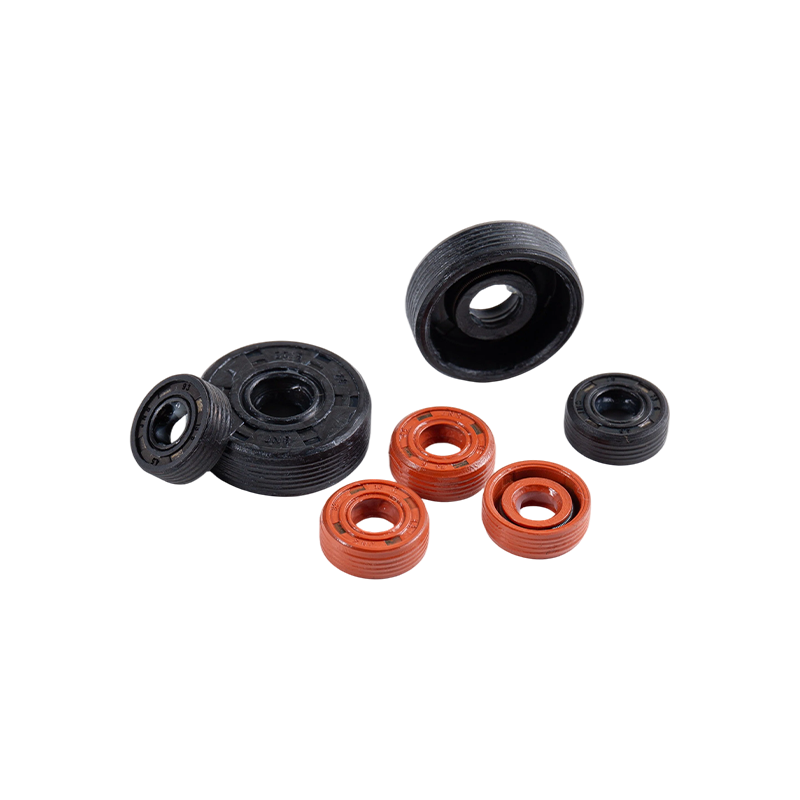 Industrial Balanced Damping Seal for 13 mm Piston SystemsA-3-001 NBR damping seal sized 13*6*4.5 for industrial gas springs and dampers, offering broad contact and lateral load capacity.View Product →
Four Specifications That Decide Whether a Balanced Damping Seal Fits
Four numbers decide whether a balanced damping seal will work in a given damper: rod diameter, rated load, material, and motion type.
Rod diameter sets the lip preload. A 0.1 mm mismatch between the nominal bore and the real rod is enough to swing the seal from barely touching to heavily compressed. Rated load sets how much radial clamp the lip applies and, in turn, how much damping force the assembly can produce before the seal blows past its design point. Material sets the temperature and fluid window. Motion type decides whether a dynamic lip profile is needed at all.
| Specification | Range | Why it decides the outcome |
| Rod diameter | 10.6 mm to 29 mm across the standard Y-seal series | Lip preload is set by the gap between nominal and actual rod size |
| Rated load | 500 N to 6000 N | Determines radial clamp force and the maximum damping force the seal can hold |
| Seal material | HNBR, NBR, FPM | Sets the temperature ceiling and resistance to the damping fluid |
| Motion type | Dynamic reciprocating for most dampers | Static gaskets use a completely different cross-section |
| Pressure class | Standard through ultra-high pressure variants | Higher pressure requires material behind the lip to prevent extrusion |
Read those four together, not in isolation. A seal with the right bore and the wrong load grade will fit perfectly and still fail the damping curve on the first thermal cycle.
Balanced vs Standard Lip Seals: Where the Difference Shows Up
The difference between a balanced damping seal and a standard lip seal is invisible on a new assembly. It appears after tens of thousands of cycles under side load, when the standard seal has already started to lose its grip on the rod.
On a centered, lightly loaded rod, both designs behave almost identically. Push the rod off-axis, or raise operating pressure, and the single-lip seal begins losing contact pressure on the unloaded side. The balanced profile holds on both sides.
Rated load is the easiest place to see how the catalogue is structured. JNS grades its gas spring sealing line from 500 N up to 6000 N, with most of the density sitting in the 1000 N to 3000 N band.
500 N
1060 N
2000 N
3000 N
6000 N
A lip seal that loses contact pressure on one side of the rod does not wear out first. It leaks first.
That single sentence explains why so few damper failures trace back to a visibly destroyed seal. The part looks serviceable when it comes out. The leakage already happened.
Why Material Grade Decides Damping Seal Life, Not Size
HNBR, NBR, and FPM all seal damping oil at room temperature. They stop being equivalent the moment temperature, pressure, or fluid chemistry moves away from ambient.
NBR General purpose, lowest cost, mineral-based damping oils
HNBR Higher heat ceiling, ozone and additive resistance, better compression set
FPM Widest temperature and fluid compatibility, highest cost
NBR, or nitrile rubber, is the general-purpose answer. It handles mineral-based damping oils at standard operating temperatures at the lowest cost, and it is the right choice for high-volume products that will never see a hot engine bay or a sterilizing cycle.
HNBR, hydrogenated nitrile rubber, is the same polymer backbone with the double bonds saturated. That single change raises the temperature ceiling, improves tensile retention after heat aging, and adds resistance to ozone and aggressive additives. In damping service, HNBR is what you specify when the seal has to survive both heat and pressure without taking a compression set. Several JNS Y-profile seals are built specifically around HNBR for high-temperature and corrosion-resistant duty.
FPM, fluorocarbon rubber and widely known under the Viton trade name, covers the widest temperature range and the longest fluid compatibility list. It is also the most expensive. FPM earns its place in rotary seals and in dampers exposed to aggressive fluids, and it is overspecified everywhere else.
The practical rule: choose the material that survives the worst soak condition the damper will ever see, not the average condition it will spend most of its life in.
Sizing a Balanced Damping Seal to a Real Damper
Start with the damping force the damper has to generate, work backwards to a load rating, and only then pick a bore size. Reversing that order produces seals that fit but do not damp.
- Measure the actual rod diameter with a micrometer, not the drawing. A nominal 16 mm rod measuring 15.92 mm changes lip preload by more than a full load grade.
- Calculate peak damping force from the damper geometry and the required motion profile.
- Choose the lowest rated load that covers that force with margin. Higher load grades clamp harder, raise friction, and add heat.
- Check expected side load or rod deflection. If the rod runs visibly off-axis, specify a balanced profile rather than a tighter standard seal.
- Confirm the material against the damping fluid and the maximum soak temperature, not the steady-state temperature.
When High-Pressure Duty Requires a Reinforced Profile
Gas springs and dampers running above the standard load band need a reinforced cross-section. The reinforced L-type geometry adds material behind the lip so it cannot extrude into the clearance gap under peak pressure, which is the failure mode a standard lip seal reaches first once pressure climbs.
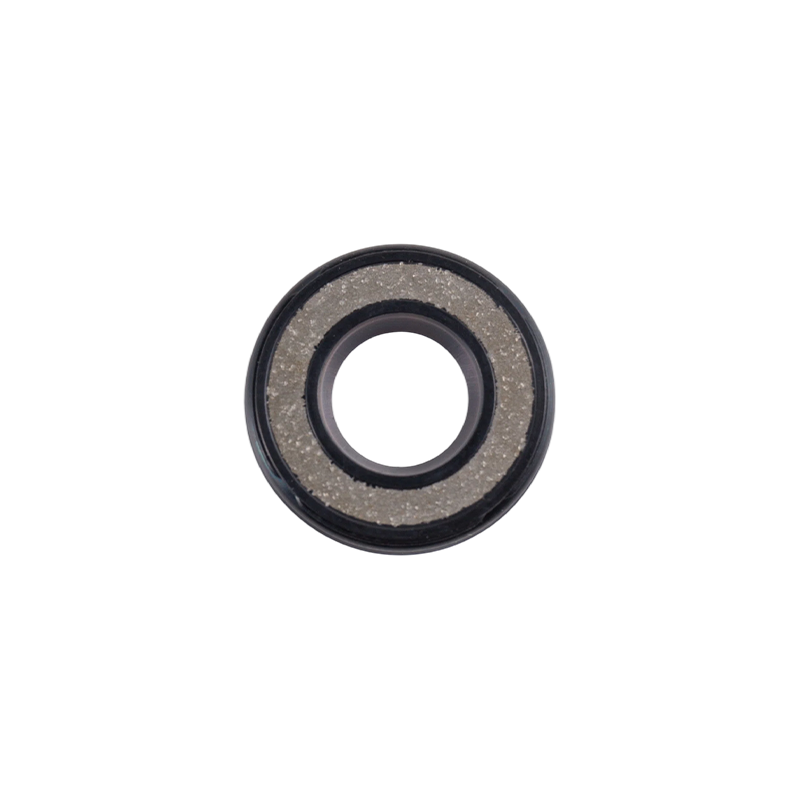
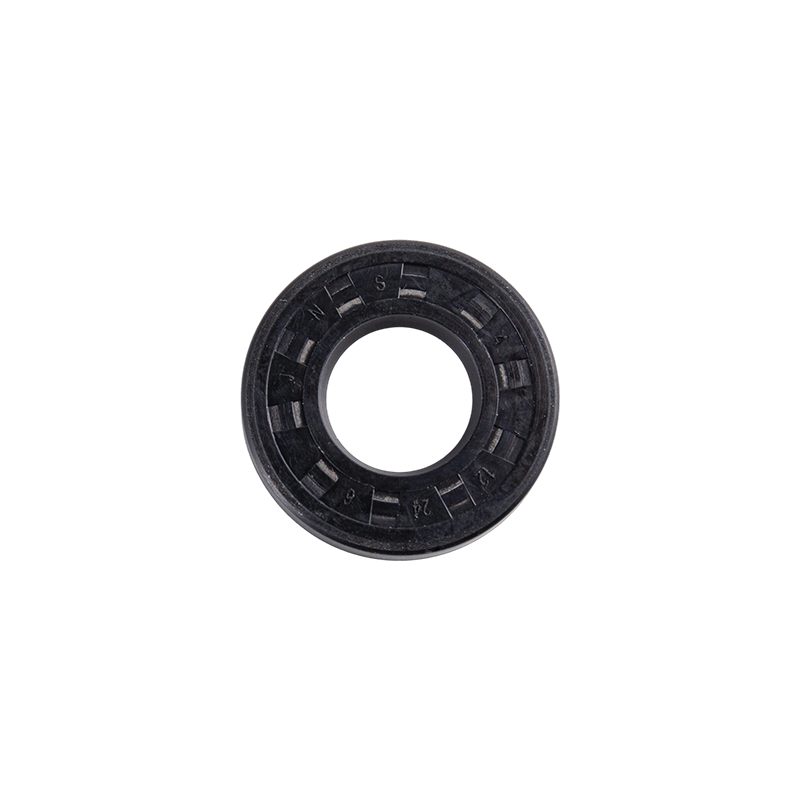 High-Pressure Reinforced L-Type Seal for Heavy LiftingA-2-004 NBR L-type seal rated 600-1800N, sized 24*10 with anti-extrusion lips for high-thrust heavy lifting and pressing equipment.View Product →
Small-bore dampers compress the same logic into a much tighter envelope. Miniature precision linear dampers in medical arms and instrument covers often run rods under 10 mm, where lip thickness and concentricity matter more than load rating, and where a fraction of a millimeter of eccentricity is a large percentage of the seal cross-section.
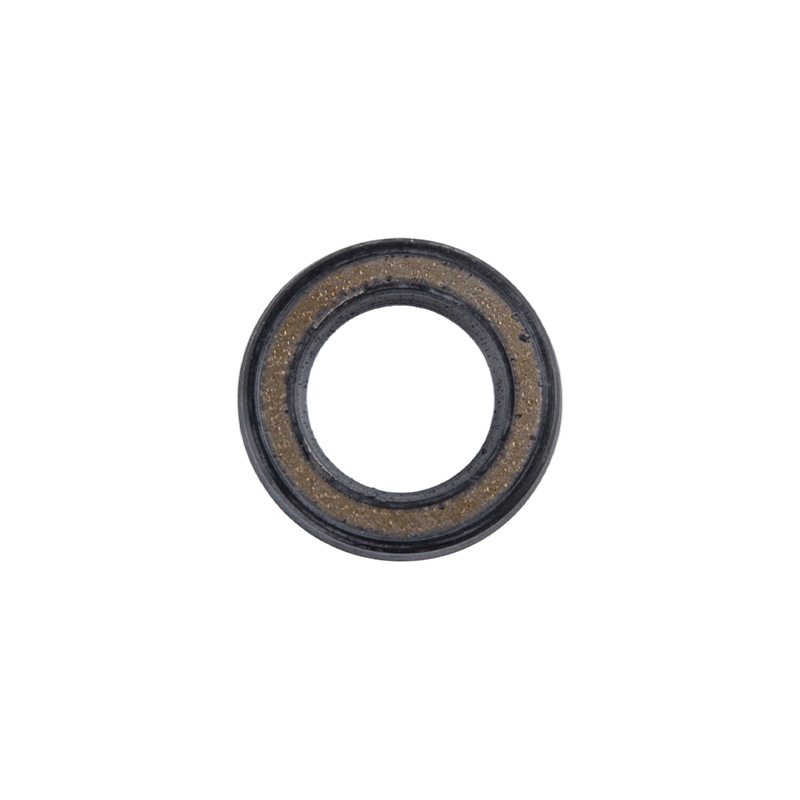
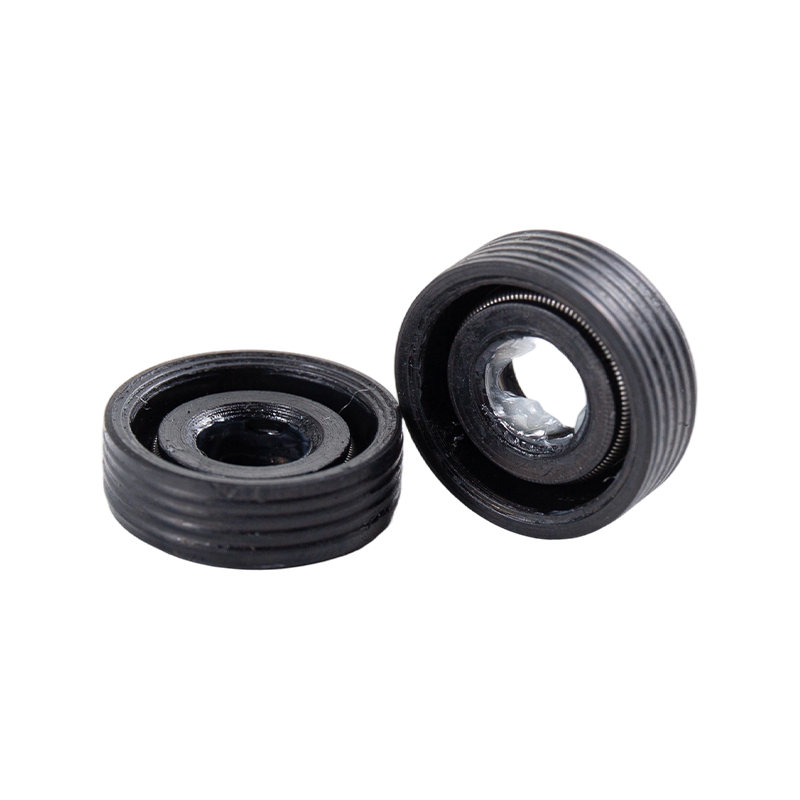 Miniature Precision Linear Damping Seal for 9 mm RodsA-3-002 NBR seal sized 9*4*3.5 for compact shock absorbers and small buffers needing precise, low-hysteresis linear damping.View Product →
Installation Mistakes That Kill Balanced Damping Seals
Most balanced damping seals that fail in the field were damaged before the damper ever ran. The geometry survives millions of cycles. It does not survive a sharp edge during assembly.
- Rolling the lip over a threaded rod end or a snap-ring groove. Any burr on the rod cuts a path that pressure will follow.
- Twisting the ring during installation. A twisted lip runs at an angle to the rod, which recreates exactly the asymmetric load a balanced design is meant to remove.
- Skipping lubrication on dry assembly. Elastomer lips that run dry for the first few strokes can score the rod and take a permanent set.
- Mixing materials across one damper. An HNBR rod seal paired with an NBR wiper ages at a different rate and opens a gap between them.
- Stretching the seal over the rod instead of using a proper installation sleeve. Permanent deformation from over-stretch shows up as a low spot on the lip.
Verifying that the right part actually arrived is its own step. Compound markings, hardness checks, and dimensional inspection belong in the receiving process, and suppliers that document them make field diagnosis far faster. JNS publishes its own quality process for that reason.
Frequently Asked Questions
What makes a damping seal "balanced"?
Balanced refers to the lip geometry. A balanced damping seal has a symmetric or double-acting cross-section that spreads radial contact force evenly around the circumference, so contact pressure does not spike on the loaded side of an eccentric rod. A standard single-lip seal concentrates that force on one side and loses contact on the other.
Can I replace a standard lip seal with a balanced one without changing the housing?
Usually yes, provided the groove dimensions and rod diameter match. The outer profile is often compatible with the same housing, while the inner lip geometry does the work differently. Always confirm the groove width and depth against the seal drawing before swapping, because a balanced profile sometimes needs slightly more axial room.
Which material should I choose for a high-temperature damper?
HNBR is the standard answer for combined heat, pressure, and oil exposure in gas spring and damper service. FPM is the answer when the temperature range is wider or the fluid is chemically aggressive and cost is secondary. NBR remains correct for moderate-temperature dampers where cost per unit drives the decision.
How do I know if side load is high enough to need a balanced seal?
Measure rod deflection under the worst-case load, or check the eccentricity between the rod and the tube bore. If the rod visibly runs off-axis, or if the damper geometry introduces a consistent lateral force, specify a balanced profile. If the rod stays centered through the full stroke, a standard profile will usually serve.
PREV:Industrial Standard L-Ring Kinetic Seal: Specs, Tolerances, and Failure Fixes
NEXT:Silicone Rubber Ring Selection Guide: Properties, Applications, Hardness and Specs
NEXT:Silicone Rubber Ring Selection Guide: Properties, Applications, Hardness and Specs


Want to know more
about us?
about us?

Precision sealing for gas springs and dampers. Durable, wear-resistant, and built for long-life performance in demanding applications.
Product Categories
Quick Links
Contact Us
-
Email: jns@jnsseals.cn

-
Manager Gong: +86-18563770820

-
Manager Wang: +8615357558902
-
No. 5, Meilin Avenue, Meilin Industrial Development Zone, Ningguo City, Anhui Province, China

