

 English
 русский
 Deutsch
 Türk
 中文简体
Silicone Rubber Ring Selection Guide: Properties, Applications, Hardness and Specs
Silicone Rubber Ring Selection Guide: Properties, Applications, Hardness and Specs
Silicone Rubber Ring Selection Guide: Properties, Applications, Hardness and Specs
Silicone Rubber Ring Selection Guide: Properties, Applications, Hardness and Specs
Silicone Rubber Ring Selection Guide: Properties, Applications, Hardness and Specs
Silicone Rubber Ring Selection Guide: Properties, Applications, Hardness and Specs
Silicone Rubber Ring Selection Guide: Properties, Applications, Hardness and Specs
Silicone Rubber Ring Selection Guide: Properties, Applications, Hardness and Specs
Silicone Rubber Ring Selection Guide: Properties, Applications, Hardness and Specs
Silicone Rubber Ring Selection Guide: Properties, Applications, Hardness and Specs
Silicone Rubber Ring Selection Guide: Properties, Applications, Hardness and Specs
Silicone Rubber Ring Selection Guide: Properties, Applications, Hardness and Specs
Silicone Rubber Ring Selection Guide: Properties, Applications, Hardness and Specs
Silicone Rubber Ring Selection Guide: Properties, Applications, Hardness and Specs
Silicone Rubber Ring Selection Guide: Properties, Applications, Hardness and Specs
Silicone Rubber Ring Selection Guide: Properties, Applications, Hardness and Specs

Industry news
Home / News / Industry news / Silicone Rubber Ring Selection Guide: Properties, Applications, Hardness and Specs
NEW Category
Contact us
Silicone Rubber Ring Selection Guide: Properties, Applications, Hardness and Specs
Content
A silicone rubber ring is not a general-purpose industrial seal. It is a specialized elastomer that earns its place where temperature extremes, weathering or food contact matter more than oil resistance. A food processing line running steam sterilization at 135°C, an automated valve in an outdoor solar thermal system, or a medical device that repeatedly sees autoclave cycles are the cases where a silicone O-ring outperforms a standard NBR ring. The same silicone ring that thrives in hot steam can swell and fail within hours in a hydraulic work station. That contrast is why the material selection decision deserves a rigorous review before ordering. Ningguo Jnsseals Sealing Technology Co., Ltd. applies this review across automotive, furniture, appliance, medical device and construction industries through its industrial sealing solutions.
Silicone rubber rings hold useful elasticity from -60°C to +230°C, a span of nearly 300°C that no oil-resistant elastomer can match.
What Is a Silicone Rubber Ring?
A silicone rubber ring is a circular elastomer gasket molded from a silicone polymer, used to prevent fluid or gas leakage at a static joint or a slow dynamic interface. The polymer backbone is built on silicon-oxygen bonds rather than the carbon-carbon bonds found in NBR, HNBR or FPM compounds. That molecular difference drives both its thermal stability and its weak resistance to mineral oils.
Cross-section shape also matters. Most silicone rings are produced as standard O-rings with a circular cross section, but static flange applications often use X-rings or square-section gaskets to increase contact area. A round cross section seats more reliably in shallow grooves, while an X-ring offers a higher sealing point count and lower breakout friction.
Key facts about silicone rubber rings:
- Hardness: 40 to 80 Shore A, with 60 to 70 Shore A the most common general-purpose range.
- Temperature: -60°C to +230°C continuous service, with short peaks near +300°C.
- Compression set: 20 to 30 percent at 150°C after 22 hours of exposure.
- Water and steam: excellent resistance up to 130°C in wet food and medical environments.
- Oil and fuel: poor resistance, with significant swelling and softening in mineral oils.
For dynamic sealing applications that involve oil-contaminated motion, the standard kinetic O-ring in NBR offers a more robust option.
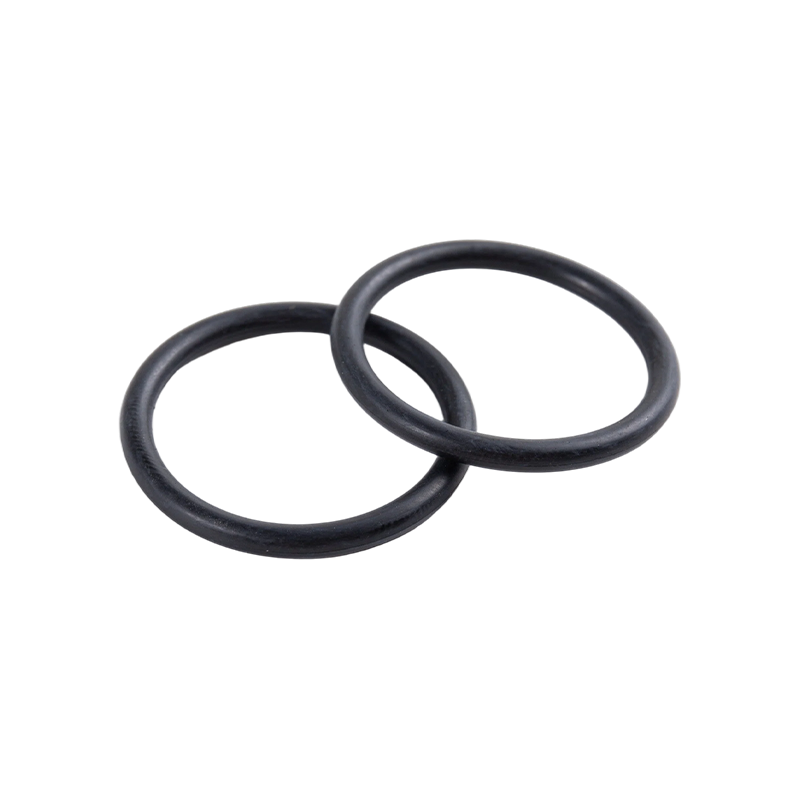
 Standard Kinetic O-Ring for Dynamic Sealing ApplicationsThis 7mm ID O-ring with a slim 1.9mm cross-section reduces movement resistance, making it suitable for high-frequency reciprocating seals. Its NBR material handles oil-contaminated motion well, offering a robust choice over silicone for dynamic use.View Product →
Silicone Rubber Ring Properties That Drive Selection
Silicone offers a combination that no oil-resistant elastomer provides: extreme temperature tolerance, excellent ozone and UV resistance, and low compression set. But those credits come with debits. Weak petroleum resistance, moderate abrasive wear and low tear strength limit its use in high-pressure hydraulic service. Hardness selection is a balancing act. A soft 50 Shore A silicone ring seals low-pressure water lines easily and deforms into irregular mating surfaces, but it can be extruded through a 0.5 mm gap at 2 MPa. A harder 80 Shore A ring resists extrusion but requires tighter groove finish and higher clamping force. Most suppliers recommend 70 Shore A as a general-purpose starting point for static silicone seals.
For a complete breakdown between NBR, HNBR and FPM, read our engineering material comparison guide.
40-80 Shore A Typical hardness range
-60 to 230 °C Continuous service range
20-30% comp set at 150°C after 22 hours
Poor oil swells in mineral oil
| Property | Silicone (VMQ) | NBR | HNBR | FPM |
| Temperature range | -60 to +230°C | -30 to +120°C | -30 to +150°C | -20 to +200°C |
| Oil resistance | Poor | Excellent | Excellent | Excellent |
| Water / steam | Excellent | Good | Very good | Good |
| Ozone / UV | Excellent | Fair | Good | Excellent |
| Abrasion resistance | Fair | Good | Very good | Good |
| Compression set at 150°C | 20-30% | 45-55% | 30-40% | 25-35% |
Service temperature range by elastomer compound
Where Silicone Rubber Rings Perform and Where They Fail
Silicone rubber rings are the right choice for environments that are hot, wet or exposed to sunlight. They also meet FDA and USP Class VI requirements when formulated for food and medical contact. Common installations include steam sterilizers, food transfer pump housings, beverage process valves, oven and appliance gaskets, electrical connector seals and medical device components.
The failure case is equally clear. Silicone is not recommended for hydraulic cylinders running on mineral oil, fuel systems, lubricated pneumatic cylinders, high-pressure reciprocating pumps or high-speed rotary shaft sealing.
Choose a silicone rubber ring
- Hot steam and autoclave conditions
- Ozone-rich or UV-exposed outdoor hardware
- FDA food contact and medical applications
- Low-pressure static gasketing in appliances
Choose an oil-resistant compound
- Hydraulic fluid or lubricating oil contact
- Fuel, solvent or gas contact
- High-pressure dynamic reciprocating motion
- Abrasive metal-to-metal sealing interfaces
For medium-duty hydraulic sealing applications, an NBR hydraulic O-ring handles mineral oil and pressure better than silicone.
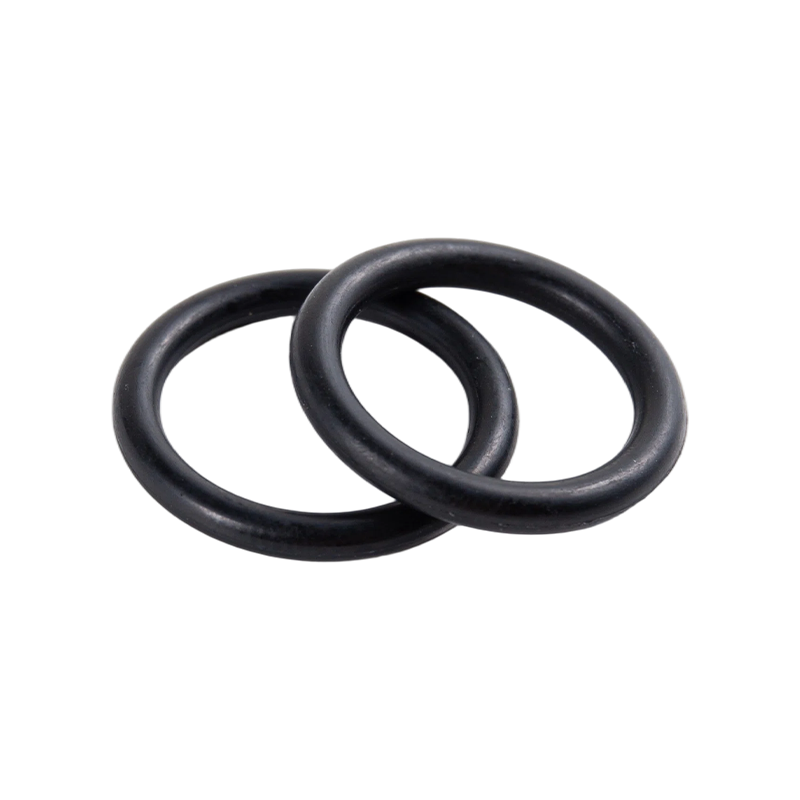
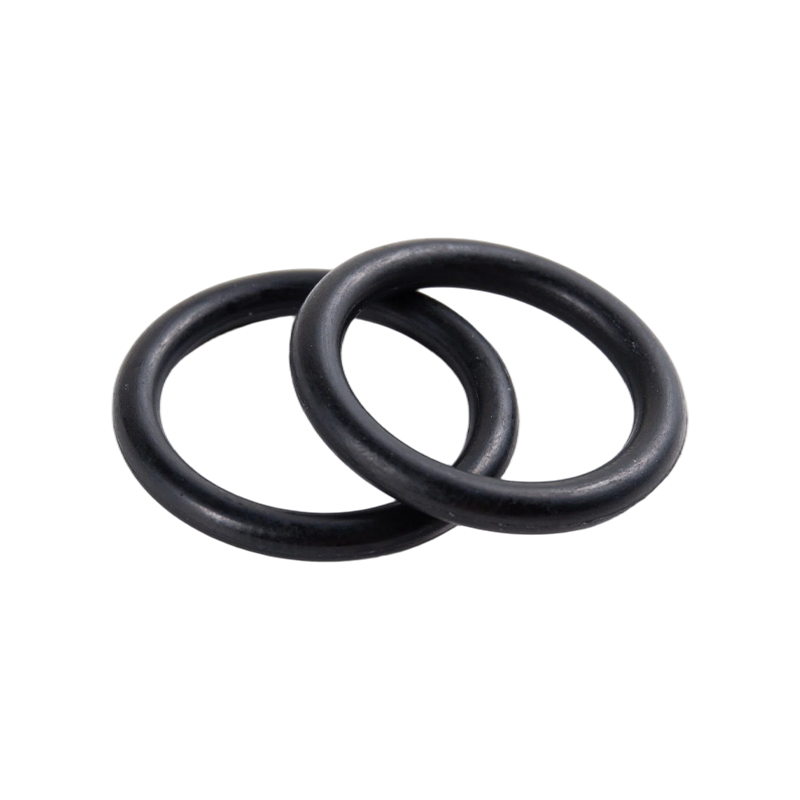 Medium-Duty Hydraulic O-Ring for Mineral Oil ServiceDeveloped for 20mm ID hydraulic actuators, this NBR O-ring is optimized for mineral oil media. It provides reliable sealing in medium-duty hydraulic applications where silicone would fail due to oil incompatibility.View Product →
How to Select a Silicone Rubber Ring for Your Application
A structured selection process reduces the risk of choosing the wrong material. Follow these five steps before you place an order.
1
Define the operating fluid
Water, steam, air and food are safe for silicone. Oil, fuel and hydrocarbon solvents are not.
2
Determine the temperature range
Record both continuous and peak values. Silicone handles -60°C to +230°C continuous. If your process exceeds +230°C and oil is present, a high-temperature FPM seal is a better choice.
3
Calculate pressure and motion type
Static seals can use 50 to 70 Shore A. Dynamic reciprocating seals require 80 to 90 Shore A to resist extrusion and wear.
4
Check compliance standards
Confirm FDA 21 CFR 177.2600 or EU 1935/2004 for food contact, and USP Class VI for medical devices.
5
Specify groove dimensions and tolerances
Follow ISO 3601-1 class A tolerances and account for silicone swell in aromatic solvents during gland design. From a procurement standpoint, always request a material data sheet that documents specific gravity, elongation, tear resistance and temperature ratings, and define batch acceptance criteria before mass production.
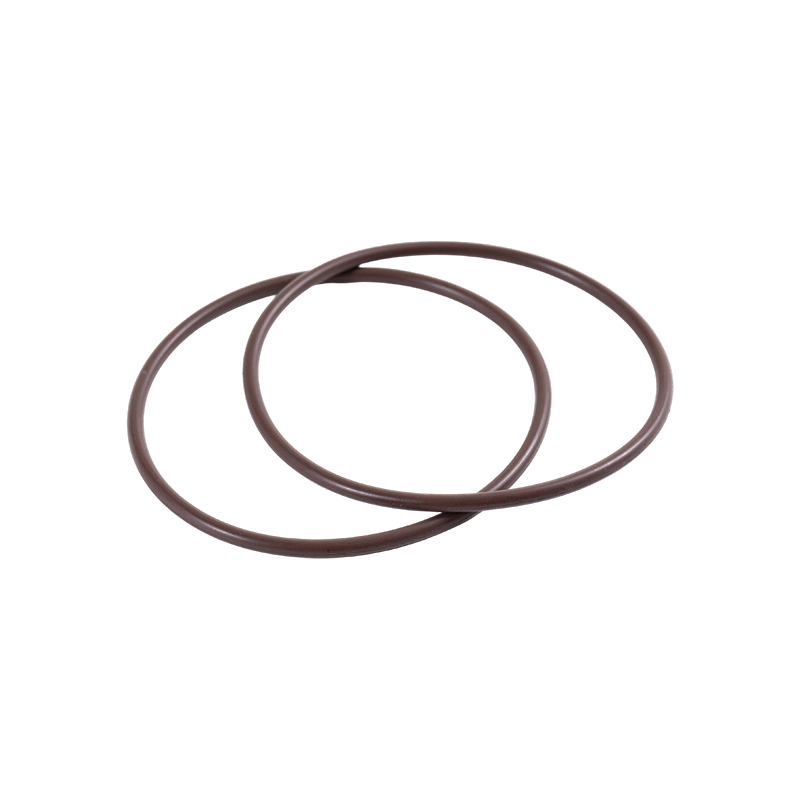
 High-Temp FPM Rotary Sealing Ring for Chemical EquipmentThis rotary sealing ring uses premium FPM (Viton) material with exceptional thermal and chemical resistance. Its 21mm OD and reinforced design suit high-speed rotary shafts and corrosive environments, offering durability beyond silicone.View Product →
Frequently Asked Questions
Can a silicone rubber ring be used with hydraulic oil?
No. Silicone is not compatible with mineral oil. The ring will swell, soften and fail within a short period. Use NBR or FPM for hydraulic oil service.
What is the maximum operating temperature for silicone rubber?
Continuous service reaches +230°C. Short-term peaks can reach +300°C, but seal life decreases as the compound approaches its thermal limit.
Is silicone rubber food-safe?
Silicone itself is inert, but food contact requires a compound formulated to FDA 21 CFR 177.2600 or EU 1935/2004 standards. Not every silicone ring is food-safe by default.
How do I choose between silicone and NBR for an O-ring?
Choose silicone for extreme temperatures, steam, UV exposure and food or medical applications. Choose NBR for petroleum oils, fuels and general hydraulic use below +120°C.
PREV:Industrial Balanced Damping Seal: Specs, Materials, and Selection Guide
NEXT:7.3mm Pneumatic-Grade Seal: Specs, Materials and Selection Guide for Engineers
NEXT:7.3mm Pneumatic-Grade Seal: Specs, Materials and Selection Guide for Engineers


Want to know more
about us?
about us?

Precision sealing for gas springs and dampers. Durable, wear-resistant, and built for long-life performance in demanding applications.
Product Categories
Quick Links
Contact Us
-
Email: jns@jnsseals.cn

-
Manager Gong: +86-18563770820

-
Manager Wang: +8615357558902
-
No. 5, Meilin Avenue, Meilin Industrial Development Zone, Ningguo City, Anhui Province, China

