

 English
 русский
 Deutsch
 Türk
Türk 中文简体
中文简体
Y-Type Oil Seal Rings Explained: Design, Materials, and How to Select the Right One
Y-Type Oil Seal Rings Explained: Design, Materials, and How to Select the Right One
Y-Type Oil Seal Rings Explained: Design, Materials, and How to Select the Right One
Y-Type Oil Seal Rings Explained: Design, Materials, and How to Select the Right One
Y-Type Oil Seal Rings Explained: Design, Materials, and How to Select the Right One
Y-Type Oil Seal Rings Explained: Design, Materials, and How to Select the Right One
Y-Type Oil Seal Rings Explained: Design, Materials, and How to Select the Right One
Y-Type Oil Seal Rings Explained: Design, Materials, and How to Select the Right One
Y-Type Oil Seal Rings Explained: Design, Materials, and How to Select the Right One
Y-Type Oil Seal Rings Explained: Design, Materials, and How to Select the Right One
Y-Type Oil Seal Rings Explained: Design, Materials, and How to Select the Right One
Y-Type Oil Seal Rings Explained: Design, Materials, and How to Select the Right One
Y-Type Oil Seal Rings Explained: Design, Materials, and How to Select the Right One
Y-Type Oil Seal Rings Explained: Design, Materials, and How to Select the Right One
Y-Type Oil Seal Rings Explained: Design, Materials, and How to Select the Right One
Y-Type Oil Seal Rings Explained: Design, Materials, and How to Select the Right One

Industry news
Home / News / Industry news / Y-Type Oil Seal Rings Explained: Design, Materials, and How to Select the Right One
NEW Category
Contact us
Y-Type Oil Seal Rings Explained: Design, Materials, and How to Select the Right One
Content
Inside a gas spring that holds a hatch open on an agricultural machine, the seal has to move, hold pressure, and survive dust and temperature swings at the same time. The same demand shows up in furniture lift cylinders, medical table actuators, and hydraulic cylinders on packaging lines. In all of these reciprocating applications, the Y-type oil seal ring is the part that separates smooth, predictable motion from premature leakage.
The conclusion up front: if your rod or piston moves back and forth, a Y-type oil seal ring will almost always outlast an O-ring, because its geometry is self-energizing and it does not roll in the groove. The rest of this guide covers how the seal works, how it compares with O-rings, and what to check before you buy.
What Is a Y-Type Oil Seal Ring?
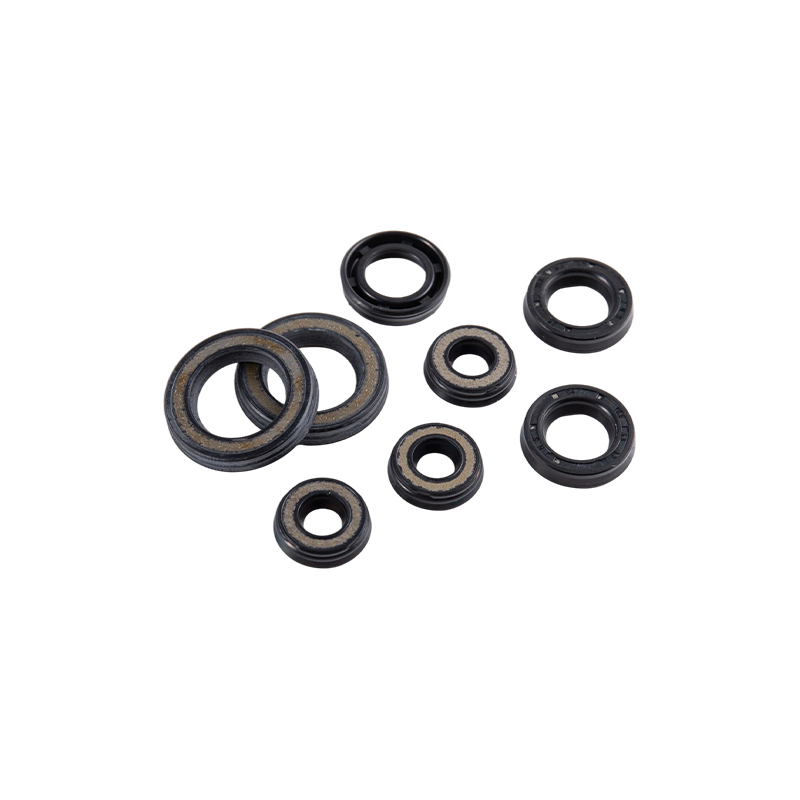
A Y-type oil seal ring, also known as a Y-ring, is a lip seal with a cross-section shaped like the letter Y. The open end of the Y faces the pressure side of the system. When the system is at rest, light interference between the lips and the mating metal surfaces keeps the medium inside. When pressure rises, the fluid or gas pushes into the cavity between the lips and forces them outward. The outer lip seals against the bore, and the inner lip seals against the rod. This self-energizing behavior is the defining characteristic of the profile.
Working Principle in Reciprocating Motion
In a reciprocating device, the seal must handle both the outward stroke and the return stroke. Each time the rod changes direction, an O-ring can begin to roll or spiral in its groove when friction is uneven. A Y-ring does not have that failure mode. Its lips flex to follow the moving surface, keeping the contact point stable. Because the contact area is limited to the lip edges, friction stays lower and more consistent than the full-contact friction of an O-ring. The result is less heat, less wear, and quieter operation.
Hydraulic and Pneumatic Suitability
The Y-profile works in both hydraulic oil and compressed air systems. In hydraulics, it prevents oil leakage and keeps the pressure steady. In pneumatics, lower friction is an advantage because air systems often run dry, and a seal that generates high friction will overheat and wear quickly. The profile also tolerates slight misalignment better than an O-ring, which is why Y-rings are common in gas springs and dampers where the rod may see radial loads.
Y-Ring vs O-Ring in Reciprocating Service
The choice between a Y-type oil seal ring and an O-ring is not about which one is newer; it is about where each profile performs best. An O-ring is still an excellent static seal and works acceptably in low-cycle, low-speed dynamic systems. But once the duty cycle goes up, the Y-ring takes over.
| Characteristic | Y-Type Oil Seal Ring | O-Ring |
|---|---|---|
| Cross-section | Y-shaped lips | Round |
| Friction in dynamic service | Low, concentrated at lip | Higher, full-section contact |
| Rolling or twisting risk | Low | High in reciprocating motion |
| Pressure behavior | Self-energizing | Requires back-up rings at high pressure |
| Typical service life | Long in dynamic service | Short when used dynamically |
| Best application | Dynamic rod and piston sealing | Static sealing and low-cycle use |
The practical difference matters in real machines. The self-energizing action lets a Y-ring hold pressure that would otherwise push an O-ring through the gap between the gland and the piston. Once an O-ring starts rolling, it can act like a conveyor belt, carrying small particles of debris around the circumference and carving a wear path. A Y-ring pushes debris away from the contact zone instead, which is one reason it survives longer in dirty environments.
Materials and Compound Selection
The same Y-profile can be molded from very different elastomers, and the compound often decides whether a seal lasts a month or two years. For petroleum-based hydraulic oils at moderate temperatures, NBR is the standard starting point. HNBR adds temperature resistance and better aging behavior, which makes it a common choice for gas springs and damper seals. FPM handles higher temperatures and aggressive chemicals, at a higher price. Hardness is usually specified at 70 to 90 Shore A; softer compounds seal better on worn surfaces, harder compounds resist extrusion better.
A material comparison that looks only at temperature ratings is incomplete. Compression set, which measures how well the elastomer returns to its original shape after being squeezed, matters just as much. A seal with a poor compression set leaks after a few weeks even though its maximum temperature rating looks fine on paper. When you order seals, ask for the material data sheet and check both hardness and compression set, not just the temperature range.
How to Select the Right Y-Type Oil Seal Ring
Three parameters dominate the selection: the rod and bore diameters, the load or pressure class, and the compound. Get those three right, and most other details fall into place.
Diameters and Groove Fit
Measure the rod and bore diameters with a micrometer rather than trusting the printed size on a worn part. A ring that fits a 14.5 mm rod is not the same as one for a 14.8 mm bore. The seal needs a slight interference fit on both sides; if it is too loose, it leaks at low pressure, and if it is too tight, friction rises and the seal wears quickly. Groove width should follow the manufacturer's recommendation to avoid pinching or extrusion. For rods around 14.5 mm in diameter, a 14.5 mm balanced Y-ring is a common choice because it keeps breakout friction low while maintaining stable lip contact.
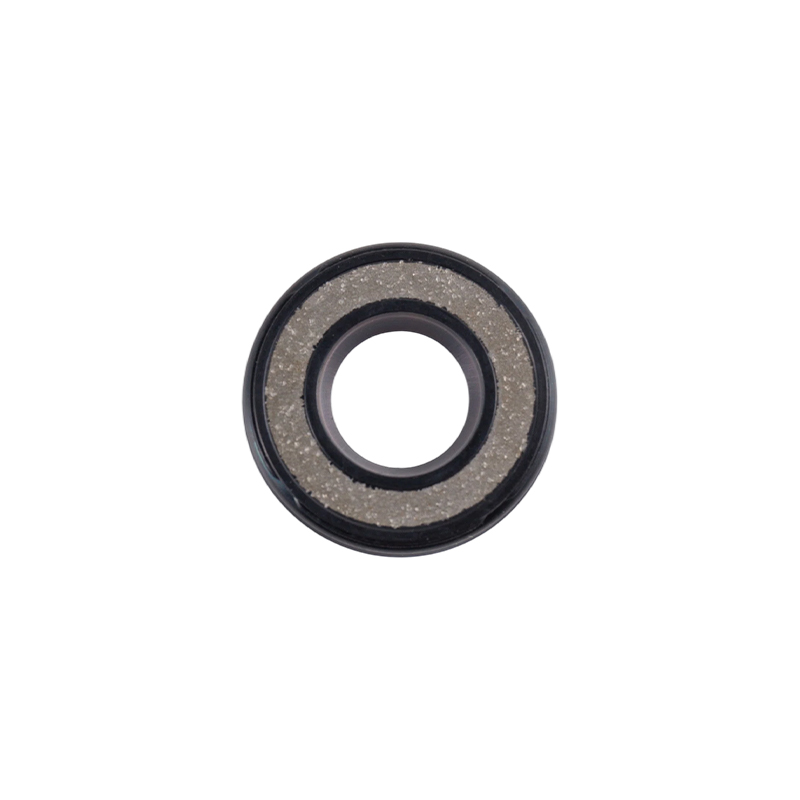 Custom 14.5mm Balanced Y-Ring Suppliers, Exporter, CompanyNingguo Jnsseals Sealing Technology Co., Ltd. Is China Custom NBR/HNBR/FPM 14.5mm Balanced Y-Ring Suppliers, Exporter and Company, Balanc...View Product →
Load and Pressure Class
Seal manufacturers rate Y-rings by load class, and picking a class close to the actual operating point matters more than the nominal diameter. In JNS's range, Y-type rings run from 500 N for light industrial reciprocating duty to 6000 N for giant-thrust heavy-duty presses. If your system sees peak loads of 1800 N, a 1060 N medium-pressure seal runs too close to its limit. The 1500 N heavy-duty hydraulic Y-seal leaves a realistic margin for pressure spikes and contamination.
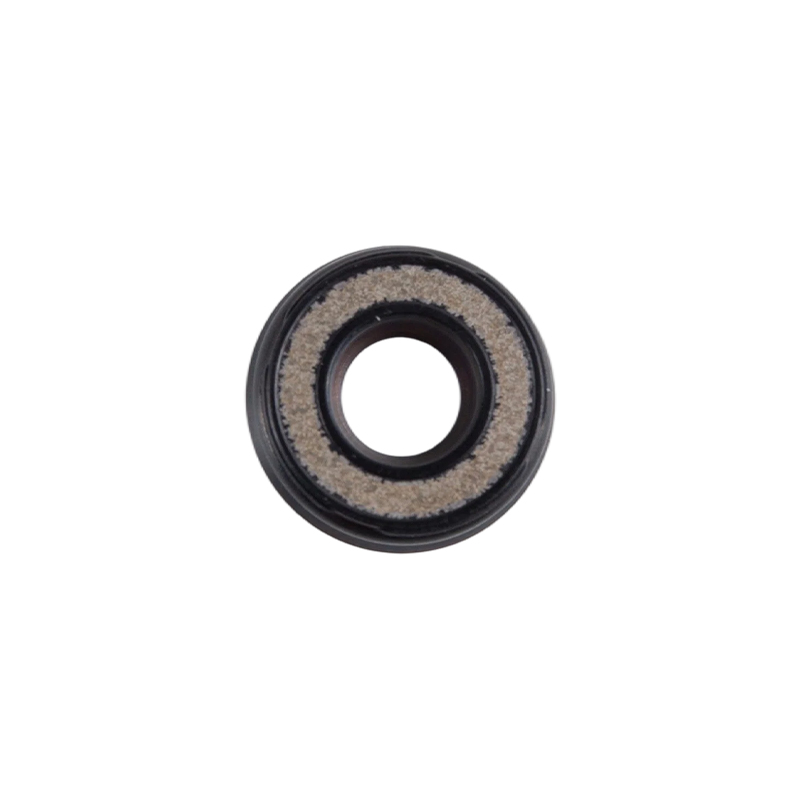 Custom 1500N Heavy-Duty Hydraulic Seal Suppliers, Exporter, CompanyNingguo Jnsseals Sealing Technology Co., Ltd. Is China Custom NBR/HNBR/FPM 1500N Heavy-Duty Hydraulic Seal Suppliers, Exporter and Compan...View Product →
Profile Geometry
Not all Y-rings behave the same. A balanced Y-ring reduces breakout friction and is the better choice for smooth-moving furniture gas springs and precision actuators. Reinforced Y-rings have a thicker heel section to resist extrusion under pressure spikes. Dual-function designs combine two sealing edges into one ring, which is useful in compact assemblies where space is limited. If a prototype does not meet the required force curve, the seal profile, not the compound, is the first thing to review.
Installation and Common Pitfalls
Most early Y-ring failures come from the environment around the seal, not from the seal itself. Three causes show up again and again:
- Sharp edges or burrs at the groove entrance that cut the lip during assembly.
- A rod surface finished below 0.2 to 0.4 µm Ra, which wears the lip like a file.
- Dry assembly that tears the lip before the first stroke.
Chamfer the groove edges at 15 to 30 degrees, polish the rod to the recommended finish, and apply a thin film of working fluid or compatible grease before assembly. Also make sure the open side of the Y faces the pressure. Installing the ring backwards turns it into a one-way seal that leaks immediately.
Typical Applications and Industries
Y-type oil seal rings appear in gas springs, dampers, hydraulic cylinders, pneumatic actuators, and pumps. The common thread is reciprocating movement. Furniture manufacturers use them in gas lift mechanisms; automotive suppliers use them in hood struts and seat dampers; medical equipment makers rely on them in height-adjustable tables; construction machinery uses them in boom cylinders and stabilizer legs.
The load class tells you how much margin you have. A 500 N industrial reciprocating seal fits light-duty cylinders and pneumatic fixtures. At the other end, seals rated at 6000 N handle large presses and heavy hydraulic actuators. As a general rule, choose a load class at least 25 percent above the maximum calculated load to allow for pressure spikes and temperature changes.
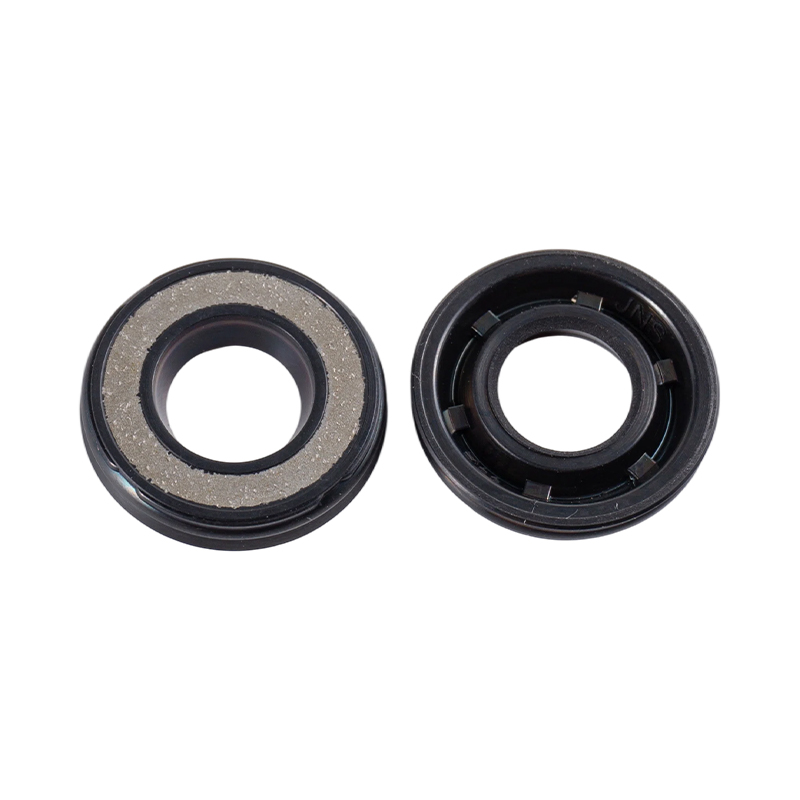 Custom 500N Class Industrial Reciprocal Seal Suppliers, Exporter, CompanyNingguo Jnsseals Sealing Technology Co., Ltd. Is China Custom NBR/HNBR/FPM 500N Class Industrial Reciprocal Seal Suppliers, Exporter and ...View Product →
If you are defining a seal for a new product, reviewing the range of industrial applications we support can help you connect the right profile to the right operating conditions.
Working with a Seal Manufacturer
When you buy Y-type oil seal rings as replacement parts, keep a record of the original dimensions, the compound grade, and the operating conditions. When you specify them for a new design, the fastest route is to start from an existing catalog size and then confirm the material with the supplier. A precision sealing manufacturer like JNS, which builds Y-type rings for gas springs and dampers on a regular basis, can usually recommend a compound and profile from existing tooling. That shortens lead time and avoids the cost of a custom mold.
A Y-type oil seal ring is not a complex part, but the cost of choosing the wrong profile or compound is real: unpredictable friction, early leakage, and downtime in the middle of a production run. Start with operating pressure and temperature, verify the diameter to within 0.1 mm, select a load class with margin, and confirm the elastomer data sheet. Do that, and the seal becomes one of the most reliable components in your cylinder. Our engineering team can review your drawing and recommend a tested configuration if you are not sure where to start.
PREV:Damping Oil Seal Guide: How They Work, Why They Fail, and How to Choose
NEXT:O-Shaped Oil Seal Ring: Technical Selection Guide for Hydraulic and Pneumatic Applications
NEXT:O-Shaped Oil Seal Ring: Technical Selection Guide for Hydraulic and Pneumatic Applications


Want to know more
about us?
about us?

Precision sealing for gas springs and dampers. Durable, wear-resistant, and built for long-life performance in demanding applications.
Product Categories
Quick Links
Contact Us
-
Email: jns@jnsseals.cn

-
Manager Gong: +86-18563770820

-
Manager Wang: +8615357558902
-
No. 5, Meilin Avenue, Meilin Industrial Development Zone, Ningguo City, Anhui Province, China

